Insights
5 minutes
17/08/2026
Portfolio enhancements to improve UK production by up to 14 GWh
Revamping programme to improve yield over the next 12 months
· Foresight Solar is executing a programme to enhance nine UK solar sites totalling over 150 MW.
· The panel and inverter upgrades will be concluded by summer 2027.
· The goal is to increase electricity production, generate up to £2.5 million in additional revenue per year and improve dividend cover.
More than a decade after building one of the UK's largest solar portfolios, Foresight Solar is investing in a programme of upgrades designed to increase electricity generation, improve revenues, strengthen dividend cover and support long-term shareholder returns.
The enhancements, also known as revamping, involve replacing components like solar panels and inverters with newer, more efficient equipment.
The planned works cover nine sites representing more than 150 MW of capacity – about 20% of the UK portfolio – and are scheduled to be finalised by next summer.
Why does asset lifecycle planning matter?
When Foresight Solar listed in 2013, it quickly assembled a 50-site UK portfolio, including some of the country's largest solar plants at the time.
Like any long-life infrastructure asset, solar farms require periodic reinvestment to replace equipment and maintain performance. These investments are expected and budgeted for in long-term forecasts.
FSFL systematically reviews asset-level performance to track reliability and get ahead of any potential issues. This programme is part of that drive for operational excellence. It aims to maximise generation and support the Company’s objective of delivering a sustainable dividend to shareholders.
Completed projects are already delivering results
Two recently completed projects highlight the benefits of this approach.
At Pen Y Cae, a 7 MW solar farm, new and more efficient panels were installed under warranty. (Read more about the programme’s results at Pen Y Cae below.) At Abergelli, an 8 MW site, older inverters were replaced.
The works restored performance and prepared the assets for operation beyond their Renewables Obligation subsidy periods, which will expire over the next decade. Generation has since recovered strongly, supporting expectations of higher revenues and cash generation.
Quantifying the programme’s benefits
The completed projects form part of a wider enhancement programme that could increase electricity generation by up to 14 GWh each year, representing a c.2% increase in current production in Foresight Solar's core UK market.
The additional electricity is equivalent to enough power to fuel 5,321 UK homes for 12 months. It also contributes to avoid more than 4,850 tCO2e or 1,195 tonnes of oil equivalent from going into the atmosphere.
Financially, once fully implemented, the programme is expected to deliver up to £2.5 million of annual revenue, contributing around 0.05x towards the Company's current dividend cover target. At the current 8.10 pence per share target, the Investment Manager calculates the dividend will be 1.1x covered in 2026.
Executing the works
The programme focuses first on sites where upgrades can deliver the greatest operational and financial benefit.
Timing is particularly important in the UK market. Solar farms typically generate close to three-quarters of their annual revenue during the spring and summer months, making asset availability and power system performance during that period critical.
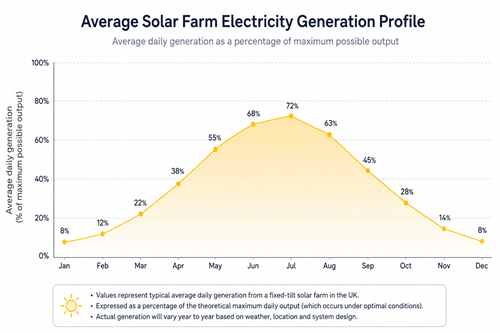
To help ensure delivery, the Investment Manager has already secured the required equipment, including replacement panels and inverters. It has also drawn on long-standing relationships with engineering, procurement and construction contractors to support the programme's timetable.
Retired panels and inverters are sent for recycling. Replaced inverters that are still operational are added to Foresight Solar's spare-parts inventory, allowing them to be redeployed across the portfolio when needed – helping reduce downtime and limit maintenance costs.
Efficiently enhancing performance
"Enhancements are an efficient way to improve performance and increase revenues in the short term. We plan on capturing that upside by drawing on existing maintenance reserves to finance the works, when possible," says Will Morgan, Foresight Solar’s lead fund manager. "These types of initiatives demonstrate our commitment to operational excellence and maintaining a strong track record: our UK portfolio outperformed original investment budgets in nine of the last 12 years."
What are maintenance reserves?
Maintenance reserve accounts are a standard feature of most renewable energy projects.
These ring-fenced cash accounts are usually established at project level and used to fund future major maintenance, equipment replacement and other lifecycle investments.
Project companies make regular contributions to the accounts over time, allowing cash to accumulate before major expenditure is required. This reduces the need to fund significant capital works directly from operating cash flows and helps smooth financial performance over the life of an asset.
For investors, the approach can also reduce refinancing risk by ensuring funds are available when major maintenance or replacement programmes are needed.
Long-term shareholder returns
As the portfolio moves into its second decade of operation, enhancement initiatives will play an increasingly important role in supporting performance.
By combining targeted upgrades with disciplined planning, Foresight Solar aims to strengthen generation, improve revenues and position the portfolio to continue performing well beyond its subsidy support period – delivering sustainable returns for shareholders for years to come.
The Pen Y Cae case study
Foresight Solar is already capturing the benefits of the enhancement programme.
At Pen Y Cae, a 7 MW solar plant in Wales, the panel replacement project concluded in March using new, more efficient modules supplied under warranty.
The improvement in performance was nearly immediate. The works have resulted in an 11% increase in the site’s production and are expected to support long-term performance as the plant approaches the end of its subsidy period over the next decade.
With the extended sunshine during this British summer, Pen Y Cae recorded its best ever monthly generation in July, when it produced 1,195 MWh of electricity – enough to power 443 UK homes for an entire year.


